
Some know it and some don’t, but targeted advertising is an auction. The winner is a combination of three factors.
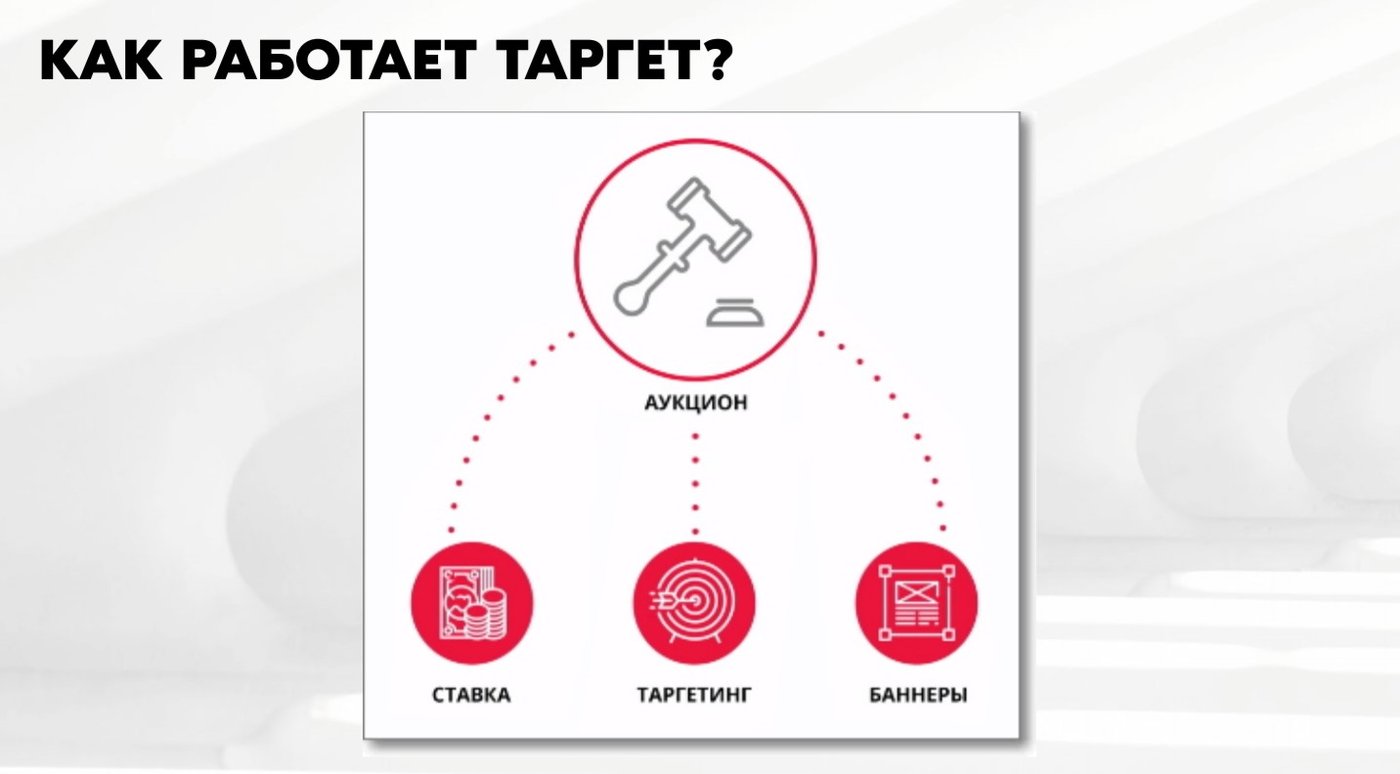
| Factor | What it drives | Who controls it |
|---|---|---|
| Bid | How often your ad is shown | You and your budget |
| Targeting | How precisely you reach the audience | You and the platform |
| Creative | How the audience reacts: clicks, likes, saves | Only you |
On some social networks this matters a lot. For example, there used to be a rule that text could take up no more than 20% of a creative. That requirement is gone now, but the fact itself — the network analyzes creatives — is what matters. One of the criteria is relevance. The network judges it by how often people like, comment, save and share.
If those numbers are high, the creative scores 10 out of 10. You get cheaper impressions, cheaper clicks, and you win the auction. If the creative is bad and people don’t engage, you get low scores and a poor audience. That’s how a social network makes sure ads are as pleasant, interesting and engaging as possible.
Who we make creatives for
Most business owners and media buyers think the person watching an ad looks like this.

- he’s focused;
- he isn’t thinking about anything else;
- he’s on social media specifically to see your creative.
In other words, he scrolls the feed waiting for your creative to appear. As soon as he sees it, he tells himself: “This is exactly what I need. Thank you for running this ad.” Well — that’s nonsense.
I teach my students something simple: your user is sitting on the toilet. He’s scrolling the feed, following memes, friends and family. He wants to switch his brain off — and he doesn’t want to see your ad.
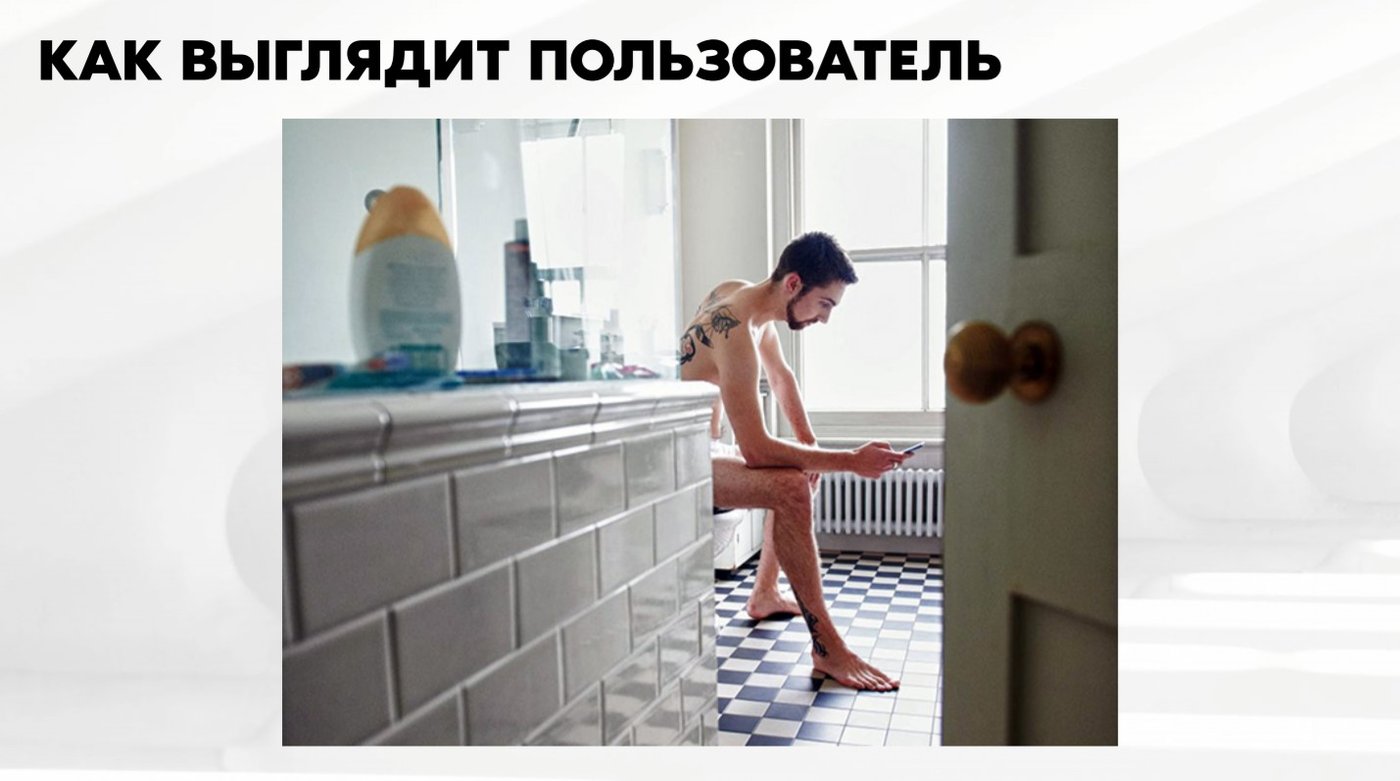
Let’s look at what the user usually sees. We’ll split it into a few groups.

- Success porn and travel — motivational posts he follows to get inspired. Or maybe just to envy.
- Kids and family photos — usually poor quality, because they’re shot on a potato and captioned: “Look how cute my little ones are.”
- Vacations, fishing and barbecues — photos the user posts himself: look how the guys and I got together and had a great time.
Here I deliberately wedge in an ad creative, followed by selfies. That’s roughly the feed a person sees on social media every day. Notice how much the ad creative sticks out.
Obviously, the human brain instantly clocks it: “That’s an ad. Nope, not interested.” People aren’t stupid, they know when an ad is being pushed at them. So they’ll ignore it. And that’s the worst outcome a creative can get.
Key points when making a creative
| Don’t | Do |
|---|---|
| The creative must sell and bring a lead | The creative grabs attention. The funnel does the selling |
| One “universal” creative | A pack of different creatives per ad set: the test shows which one is alive |
| You like it | The audience likes it. Especially humor |
| Expensive production | Sometimes an iPhone video beats a studio |
People don’t like running into ads in their feed — that’s a fact. When ads first appeared on social media, people shouted: “Oh God, ads! They’re going to push products at us all the time!” But notice — the number of users didn’t drop.
It didn’t drop because people got used to it: banner blindness developed — a state where a person subconsciously ignores any advertising. Users like ads that hook them: humor and memes work because a person doesn’t immediately realize it’s an ad — and keeps watching.
A creative’s job is to grab attention. The big mistake media buyers make is thinking a creative should bring a lead or sell something. A creative fights for the attention of a person sitting on the toilet. Standing out among the kids, the barbecues and the competitors is already a win.
High quality doesn’t mean effective. You can spend a fortune on production and fail: sometimes a creative shot on a desk with an iPhone works better. The most successful creative for a food delivery service was people filming themselves unpacking what was delivered. It worked because the viewer didn’t even realize at first that it was an ad: they thought a friend had posted the video.
The formula for a creative that works
- Press on a pain, fear or emotion. The creator has to understand the audience’s pains and fears and how the product solves them. Personalization works: the person reads the creative as a message to them personally.
- Offer the solution right away. Named the pain — give the solution immediately. Don’t tell them the company has been on the market for umpteen years: you’ll lose their attention.
- Explain how to get the solution. The problem with many creatives: they pressed on the pain, gave a solution — and vanished. Where do I go, what do I do?
- Spell out the action plan. A button, a promo code, a deadline — and the puzzle is complete.
Let me explain with pizza. A woman is scrolling her feed, thinking: the kids will be home from school soon, hungry, and they’ll drive her crazy. Suddenly she sees a creative: “Hi, worried you have nothing to feed the kids?” — we named a problem she recognizes herself in. Next: “Order a pizza for 990 rubles and feed the whole family” — we gave a solution. Then: “Order with a promo code until such-and-such date” and a button — we explained how to get it.
The less a person has to think and figure out what you want from them, the better. Show the pain, give the solution, explain what to do, sell.
Examples that worked
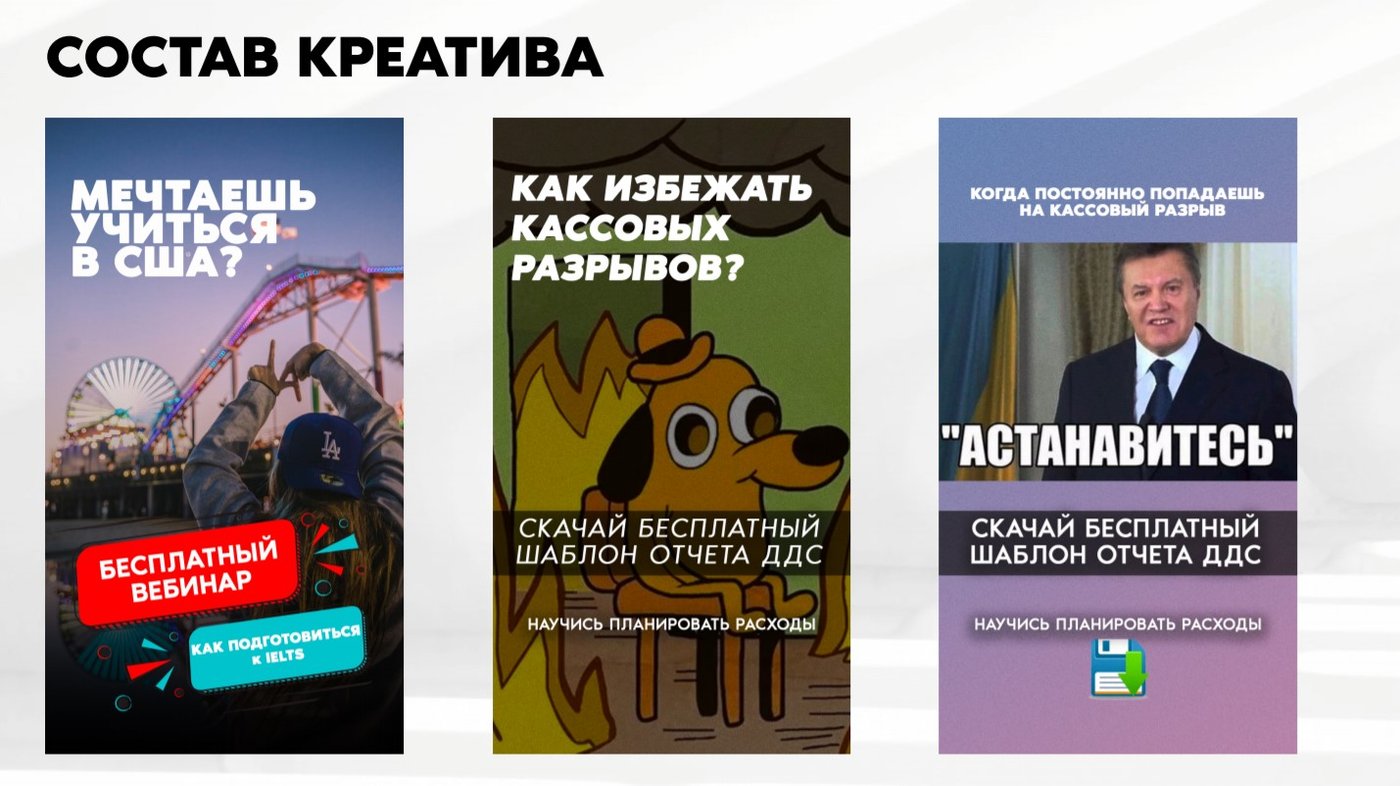
- a personalized pain — “How to avoid cash gaps?”;
- a simple solution — “Download a free cash flow report template”;
- an approach to the problem — “Learn to plan your expenses”;
- a path to the solution — a button to sign up.
In some cases I go through memes: a direct association with something fun. But carefully — what’s funny to you may not be funny to the audience.
All three creatives worked great because they follow the formula above exactly. It works in any niche. But you’ll never know which creative performs best until you launch them together: a pack per ad set, a test, then scale the winner.
FAQ
Should a creative sell?
No. A creative fights for attention. The funnel sells: the landing page, the offer, the response speed. If you demand leads from the creative, you’ll get a business-card banner that people scroll past.
How many creatives should I launch for a test?
A pack per ad set — different copy, angles, visuals. Five to ten of them. The platform will show which one is alive, and you’ll get data faster than with one-by-one tests.
What if a creative burns out?
Frequency goes up, CTR goes down — replace it. Keep a second version of the winner ready with a different angle: same pain, a different picture of the world.
Are memes OK for B2B?
Carefully. Humor shortens the distance, but what’s funny to you may be out of place for the audience. Test them in a pack, like any other creative.